Updates and small fixes keep slipping
Create a dependable route for maintenance instead of waiting for a major failure.
WEB / MAINTENANCE
Website maintenance that keeps your site useful after launch.
We handle the routine changes, technical faults and maintenance decisions that otherwise collect into a risky backlog.
WHEN THIS FITS
Create a dependable route for maintenance instead of waiting for a major failure.
Establish clear technical responsibility, priorities and access boundaries.
Manage updates, compatibility and testing with a repeatable process.
WHAT IT COSTS
Most small business websites fall between $39 and $199 per month. What moves the number is the platform, how much changes month to month, how quickly you need a response, and whether the site runs commerce or custom integrations. One-off work is priced on the scope of the job and agreed before anything starts.
Not every site needs a monthly plan. One-off fixes and changes are priced on the scope of the job and agreed before work starts, so there is no open-ended hourly meter. Suited to sites that change rarely, or to a single problem worth clearing before you decide about the ongoing plans below.
$39/month
$79/month
Everything in Essential, plus:
$199/month
Everything in Standard, plus:
$550/month
Everything in Advanced, plus:
Most small business sites sit on the Essential or Standard plan. The deciding factor is rarely the size of the site — it is how often the content changes and how quickly a broken form or a failed update needs to be dealt with. If you are not sure which fits, describe the site and we will say which plan is honest for it rather than the largest one.
WHAT WE CAN HELP WITH
Every plan above covers the same core work; the tiers differ in response speed, testing depth and reporting. Maintenance is not an unlimited bucket of tasks, so we agree what is covered, how requests are prioritised and how changes are verified.
PLATFORM COVERAGE
What maintenance actually involves depends on what the site is built on. A self-hosted install needs update discipline a hosted builder does not, and a store carries risk a brochure site never will. Support is offered for the following after an initial technical review.
Core, theme and plugin updates applied in a tested order rather than all at once, with backups verified first. Covers PHP compatibility, plugin conflicts, database upkeep and the security hardening a self-hosted install needs but rarely gets.
Squarespace handles the platform, so the work sits in content, layout and integrations. Page and section edits, template adjustments, commerce and form troubleshooting, domain and SSL checks, plus the code-injection fixes that break quietly after a template change.
Ongoing editor work, content updates and layout corrections, with attention to mobile rendering, which Wix treats as a separate view. Includes app and integration checks, form and booking flows, and SEO settings that reset when pages are duplicated.
Theme and app updates checked against checkout before they go live, since a store failure costs money directly. Covers product and collection upkeep, app conflicts after updates, payment and shipping settings, and theme edits that survive the next theme release.
Routine checks run continuously rather than monthly: uptime, broken links, form failures and content drift surface automatically. A person still reviews and approves every change, so automation shortens the detection gap without putting your site on autopilot.
For sites without a platform to lean on: static builds, headless front ends, bespoke applications and frameworks. Dependency and runtime upkeep, build and deployment pipelines, and documented handover so the site is not hostage to whoever wrote it.
CHOOSING A PLAN
Website maintenance packages are sold under a lot of names — care plans, retainers, support contracts — and the labels matter less than what sits inside them. These are the questions worth asking of any website maintenance services company, ours included.
Nearly every website maintenance company covers the same base: updates, backups and uptime checks. The best website maintenance service is separated by how fast someone answers when a form breaks, whether updates are tested before they reach the live site, and whether you get a record of what was done. Those three things are what our tiers vary — not the underlying work.
A monthly website maintenance service earns its place when the site changes regularly or when downtime costs you work. If the site sits still for months at a time, one-off web maintenance priced by scope is usually the more honest answer, and we will say so rather than sell a retainer that goes unused.
Hosting keeps the site online; maintenance keeps it working. We handle website maintenance and support on whatever infrastructure you already use, and can advise on hosting separately if the environment itself is the problem. Neither is bundled into the other without saying so.
A broken website is often not a broken website. The cause sits below the application: an outdated PHP version, a MySQL upgrade that needs testing, a full disk, an expired certificate, a server setting changed during a provider migration. Most maintenance stops at the CMS and hands you back to your host. Web maintenance here covers the stack the site runs on, including VPS and dedicated servers.
Website maintenance companies differ mainly in how much they take on. Some businesses want a web maintenance company or agency to own the whole technical surface; others want a specific list handled and nothing more. Both are legitimate. The scope is agreed before work starts, so a website support and maintenance arrangement never quietly expands into something you did not ask for.
Monthly website maintenance packages make sense once the site is load-bearing for the business. Website monthly maintenance packages at the lower end suit brochure sites that change occasionally; the upper tiers suit stores and sites where a broken checkout or form costs money the same day. Ecommerce website maintenance packages generally need the higher tiers because the testing burden is heavier.
The website maintenance services UK clients need are delivered the same way as everywhere else — the work is remote, and the packages are identical wherever the business is registered. Website maintenance UK, Europe and Commonwealth clients are billed in US dollars by Yeevu LLC. Time-zone overlap is agreed up front so response windows mean something in your working day.
SET THE CARE BOUNDARY
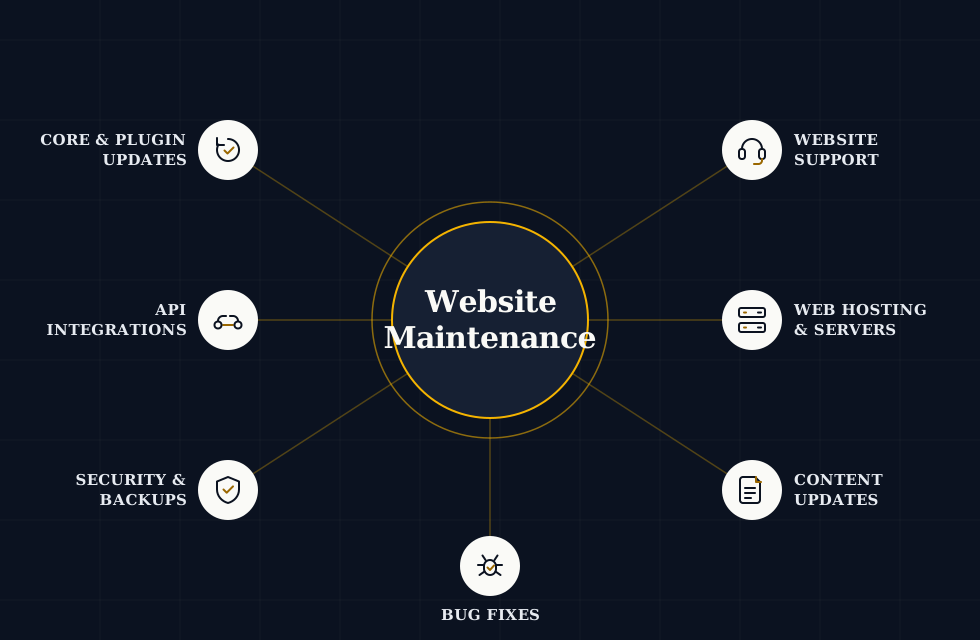
Scheduled software updates, backup checks, monitoring and recurring health reviews reduce avoidable drift between the website and the environment supporting it.
Defined content changes, broken forms, layout issues and small improvements enter a visible request queue with the access and acceptance criteria needed to close them.
Malware recovery, redesigns, major features and hosting moves receive their own scope so urgent or high-risk work is not hidden inside a routine maintenance allowance.
THE CARE CYCLE
We record the platform, hosting, owners, critical paths, current versions, backup route and known issues before accepting ongoing responsibility.
Updates, backups, monitoring and recurring checks are assigned a cadence and a clear boundary for what the plan includes.
Content changes and fixes are assessed for access, dependencies and risk, then completed with proportionate testing.
Completed work, unresolved risks and larger recommendations remain visible so maintenance does not become an unexplained monthly charge.
WHAT YOU RECEIVE
Current platform, access, backups and immediate risks recorded at the start.
Approved updates and requests implemented with proportionate checks.
Completed work, observations and recommended next actions documented.
Recovered broken pages, corrected DNS authentication issues and patched the technical layer across four engagements during a twelve-month support relationship.
COMMON QUESTIONS
Plans start at $39 per month and most small business websites sit between $39 and $199 per month. The number moves with the platform, how much changes month to month, how quickly you need a response, and whether the site runs commerce or custom integrations.
Every plan covers core, theme and plugin updates, backup verification, uptime monitoring and a defined allowance for content changes. Higher tiers add compatibility testing before updates go live, a priority queue, same-day weekday response and monthly reporting.
Not always. A plan earns its place when content changes regularly or when a broken form or failed update would cost you work. If the site rarely changes, occasional ad-hoc work priced by scope is often the honest answer.
Yes. Recurring plans are scoped around the platform, change volume and level of response required.
Usually. We begin with an access and technical review before accepting responsibility for ongoing changes.
Security incidents are handled through Website Security Services because recovery requires a separate investigation and scope.
Yes, where the request is sufficiently defined and the website can be accessed and changed safely.
The testing route depends on the platform, hosting and risk of the change. We use backups, staging where available and proportionate checks rather than assuming every update is harmless.
Our website maintenance packages run from $39 to $550 per month. Most small business sites sit in the $39 to $199 range, and the price moves with the platform, how often content changes, how fast you need a response, and whether the site runs commerce. One-off web maintenance is priced by scope instead of a monthly fee.
No provider is best for every site. The honest test is whether a website maintenance company will tell you when you do not need a plan, how quickly it answers when something breaks, and whether it leaves a record you can check. Ask any website maintenance service those three questions before comparing price.
Ask what is actually covered, how quickly requests are answered, whether updates are tested before they reach the live site, and whether you receive a record of the work. Most website maintenance services cover the same base tasks, so response speed, testing depth and reporting are what genuinely separate one website maintenance agency from another.
They are treated as separate jobs. Hosting keeps a site online; website maintenance and support keeps it working. We maintain sites on whatever infrastructure you already use and can advise on hosting separately if the environment itself is causing problems, but neither is bundled into the other without being stated.
Major redesigns, new application features, active security incidents and hosting migrations normally need a separate project scope because their risks and acceptance checks differ from routine care.
START A CONVERSATION
Share the current situation, what you have already tried and the result you need. We will come back with the most sensible next step.
Prefer a call? Choose a time →