Several platforms sending from one domain
Business mail, CRM campaigns, newsletters, transactional platforms or cold-outreach tools share reputation and authentication signals.
For businesses whose email goes out through several platforms—Google Workspace or Microsoft 365, a CRM, a newsletter tool, a transactional service—and is landing in spam, bouncing or being deferred. The audit investigates the authentication, reputation, infrastructure and sending practices behind the problem, then delivers written findings and a prioritised remediation plan.
Basic Audit $180 per domain · Full Audit $399 per domain — scope and price confirmed before access is requested.
A complete audit is most useful when the sending environment—not one isolated record—needs to be understood.
Business mail, CRM campaigns, newsletters, transactional platforms or cold-outreach tools share reputation and authentication signals.
Spam placement, blocks, deferrals, bounces or engagement changed over time and isolated fixes have not restored confidence.
Review the spam-placement guide →Several stakeholders or providers are involved and you need one evidence-led record of findings, dependencies and next actions.
The final scope follows your systems and symptoms. These are the evidence areas commonly reviewed.
SPF, DKIM and DMARC records, return-path and DMARC alignment, DKIM selectors, forwarding effects and every service authorised to send for the domain.
Read the SPF, DKIM and DMARC troubleshooting guide →Sending domains and subdomains, MX and DNS records, shared or dedicated IPs, SMTP and API settings, and conflicts between Google Workspace, Microsoft 365 and the other platforms sending as the domain.
Google Postmaster Tools and Microsoft SNDS data where available, blocklist listings, deferrals, bounces, complaint rates, inbox placement and spam folder reporting, and the limits of what each source can show.
Read the sender reputation recovery guide →Whether business, transactional and marketing email share a domain or IP, plus recent changes in sending volume, frequency, audience or warm-up pattern.
How contacts are acquired, confirmed, suppressed and re-engaged, including hard-bounce and spam-complaint handling that affects sender reputation.
One-click unsubscribe, From and Reply-To identity consistency, message headers and content patterns, checked against Gmail, Yahoo and Outlook bulk sender requirements where relevant to the symptoms.
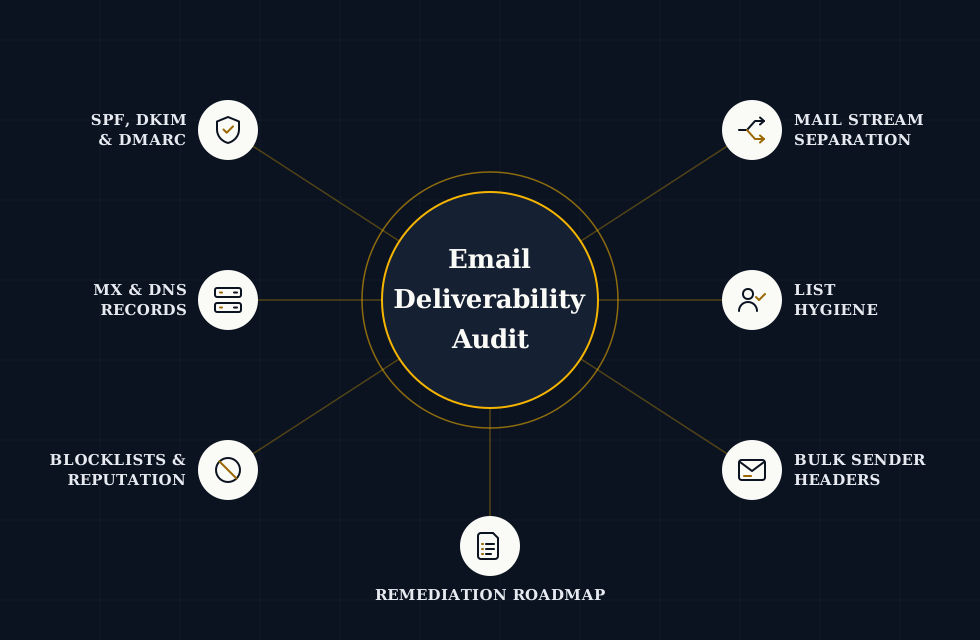
A scan is not the audit. Automated tests are useful evidence, but they rarely explain how several sending systems, reputation signals and operational choices interact. The audit connects those findings and states their limitations.
Two tiers, priced per domain. Both end in written findings and a prioritised remediation roadmap.
Authentication baseline
$180per domain
Establishes whether the records that identify you as a legitimate sender are correct, aligned and doing what you think they are doing.
Full sending environment
$399per domain
For a domain where several systems send and isolated fixes have not held. Adds the reputation evidence that authentication records alone cannot explain.
Both tiers end at the findings and the roadmap. Implementation is not included and is scoped separately once you know what needs changing — see email deliverability services for remediation and verification.
A controlled investigation with agreed access, recorded findings and no unapproved changes.
We identify the domains, sending platforms, mail streams, symptoms and evidence needed, then confirm timing and price before paid work begins.
We review public records and the agreed provider, platform or sending data. Any required access uses a named least-privilege account.
Findings are assessed together so a visible symptom is not mistaken for the root cause and one repair does not damage another mail stream.
You receive prioritised findings, recommended actions, dependencies and verification steps. Implementation can then be scoped separately if needed.
A usable decision document, not a collection of unexplained screenshots.
What was checked, what the evidence shows, important limitations and the relationship between the key issues.
Actions ordered by importance, risk and dependency so the team knows what to change first and why.
The records, provider signals or controlled tests that should be checked after implementation, including any observation period required.
Each area of the email deliverability audit produces evidence, not an opinion.
The email deliverability audit verifies SPF, DKIM and DMARC as published, then tests whether they align on mail that is actually sent.
The email deliverability audit checks domain and IP standing against provider postmaster data and the blocklists that matter commercially.
The email deliverability audit maps every system authorised to send as the domain, which is usually where the surprises are.
The email deliverability audit reviews list hygiene, consent, volume patterns and stream separation, because most placement problems start here.
We work from a named, least-privilege account you create for us, require multi-factor authentication on anything we touch, capture the prior state before every approved change and provide a written revocation checklist at handover. Yeevu LLC provides the service, receives payment and carries the liability.
Trust & Security →An email deliverability audit is a structured investigation of the systems and practices that influence whether legitimate messages are accepted and placed in the inbox. It connects authentication, DNS, sending infrastructure, reputation, provider evidence and sending behaviour into one prioritised set of findings.
Scope is confirmed before work begins. A typical audit covers SPF, DKIM and DMARC alignment; sending domains and return paths; relevant blocklists and reputation data; mailbox-provider evidence; sending platforms; bounce and complaint patterns; list and volume practices; and conflicts between systems using the same domain.
Timing depends on the number of domains, sending platforms and evidence sources involved. We confirm the expected delivery window after intake. Complex reputation cases can also need an observation period rather than a one-time scan.
Some checks are public, while provider dashboards, sending logs or platform configuration may require temporary access. When access is needed, we request a named least-privilege account with multi-factor authentication and provide revocation steps at handover.
Yes, as separate work. The audit ends at the findings and the roadmap; remediation is scoped once you know what needs changing through our email deliverability services. YeevuFix can then handle the agreed DNS, authentication and platform changes or work alongside your internal team and other providers.
The Basic Audit is $180 per domain and covers SPF, DKIM, DMARC and MX — the records that decide whether providers can identify you as a legitimate sender. The Full Audit is $399 per domain and adds blocklist checks, spam placement reporting and conflicts between platforms sending from the same domain. Scope is confirmed before access is requested, and neither tier includes implementation.
No. Mailbox providers control their own filtering, so no consultant can guarantee placement. The audit identifies controllable causes, evidence gaps and remediation priorities so decisions are based on the sending environment rather than guesswork.
Tell us the affected domain, platforms, mail type and symptoms. We will review the intake and confirm whether a full audit is the right next step.